Flower Rose Watercolors Frames: A Versatile Toolkit for Your Creative Projects
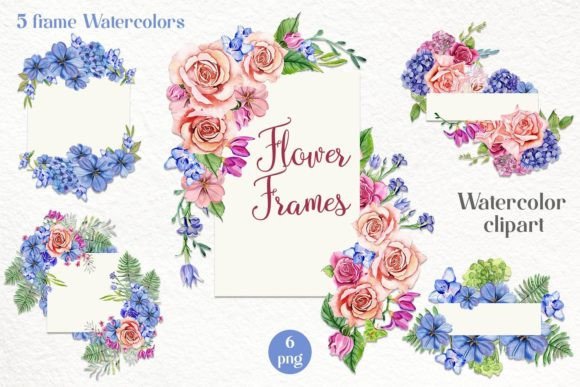
In the world of digital design assets, there’s a special category that consistently captures the hearts of creators: watercolor florals. The Flower Rose Watercolors Frames. Floral collection represents a curated set of high-quality, hand-drawn flower clipart. This specific bundle focuses on delicate summer blooms like roses, hydrangeas, tulips, and various greens, arranged into beautiful wreaths and frames in a palette of soft blues and beiges. What makes it so appealing is its incredible versatility. Whether you’re designing a baby shower invitation, branding a small business, or creating a custom t-shirt, these transparent PNG files at 300dpi are designed to integrate seamlessly into both digital and physical projects.
However, the very attributes that make such assets powerful—their flexibility and aesthetic appeal—can also lead to common pitfalls. Choosing and using clipart without a strategic approach can result in wasted time, diminished project quality, or even licensing misunderstandings. By understanding these potential missteps, you can ensure your creative endeavors are both beautiful and professionally executed.
Overlooking the Core Specifications: Resolution and Format
A frequent oversight involves not fully appreciating the technical details provided. This collection offers five flower frame designs in PNG format with a transparent background at 300dpi. Some creators, especially beginners, might download similar assets without checking these specs, leading to a frustrating experience. Using a 72dpi image for a printed wedding invitation will result in a pixelated, low-quality output, undermining the delicate beauty of the watercolor art. Similarly, a file format without transparency (like JPEG) would force you into tedious manual cropping, adding unnecessary hours to a simple project like designing a card or label.
The practical advice here is straightforward: always match the asset’s specifications to your end use. For any physical application—paper stationery, packaging, fabric printing for pillows or aprons—300dpi is essential. The transparent PNG background is your key to efficiency; it allows you to layer the floral frame over any color or texture instantly. Before downloading any clipart, confirm the listed resolution and format. This collection is explicitly tailored for high-quality mixed-use, so leveraging these specs correctly is the first step to success.
Misjudging Scope and Licensing for Commercial Applications
Another area where mistakes happen is in the assumption of “what you can do” with the artwork. This floral set is described for use in invitations, packaging, home decor, fashion, and DIY projects. This suggests broad usability, but a careful creator must distinguish between personal and commercial use. Many digital assets come with specific licenses. Using a design intended only for personal scrapbooking on a line of tote bags you sell at a market could lead to legal complications. While many such collections offer commercial licenses, it’s a detail you must verify before purchase.
To avoid this, treat the description as a starting point. Before integrating Flower Rose Watercolors Frames into a product for sale—such as branded napkins, labels for a small business, or design templates for clients—seek explicit clarification on the licensing terms. A better approach is to source your assets from platforms or designers that clearly state “commercial use allowed” or similar. This protects your business and respects the artist’s work. It’s a simple check that safeguards your project’s integrity and your peace of mind.
The Pitfall of Generic Application Without Customization
Even with perfect technical specs and a clear license, the aesthetic result can fall short if the asset is used too generically. Dropping a beautiful blue and beige watercolor wreath onto a card template without considering color harmony or composition is a common misstep. The delicate flowers might clash with bold, modern fonts or get lost on a busy background. For example, using these frames for a baby shower invitation requires you to adjust surrounding elements—perhaps choosing soft, complementary typography and a muted color scheme to let the florals be the star.
The corrective advice is to think of these frames as a high-quality ingredient, not the finished meal. Integrate them thoughtfully. Use editing software to slightly adjust hues if needed to match your brand colors, or layer multiple elements to create a unique collage. For a blog graphic, you might isolate a single rose from the frame to use as a recurring motif. This active customization transforms a stock asset into a cohesive part of your unique design, elevating the final presentation far beyond a simple drag-and-drop.
Underestimating the Preparation Needed for Physical Products
When moving from digital to physical applications—like printing on towels, t-shirts, or wrapping paper—the leap requires additional preparation. A creator might assume that because the file is 300dpi, it’s ready to send to a printer. However, different materials and printing techniques (screen printing, digital textile printing, offset for paper) have specific requirements. The intricate watercolor details and transparent areas in these floral frames need to be tested. A very delicate line might not translate well onto a coarse fabric for an apron if the print method isn’t suited.
To navigate this successfully, always conduct a test print. Order a single sample pillow or print a proof of your wrapping paper before committing to a large batch. Communicate with your printer about the design’s intricate nature and ensure their process can capture the delicate beauty. Furthermore, check how the transparent background interacts with your chosen material color; a beige floral on a white towel looks different than on a navy one. This due diligence ensures the handmade quality of the clipart is preserved in the final product, satisfying you and your customers.
Failing to Plan a Cohesive Project Set
The collection includes five distinct flower frame formats. A missed opportunity is using them sporadically rather than as a coordinated set. For a small business owner creating packaging, labels, and tags, consistency builds brand recognition. Using a different, unrelated floral on each item creates visual chaos. Conversely, employing these five complementary frames across your product line—one for tags, another for labels, a simpler one for cards—creates a unified, professional aesthetic.
Plan your use holistically. Before starting, look at all five frames. Assign each to a specific role in your project suite. Perhaps the most ornate wreath is for your main invitation card, a simpler one for the accompanying napkin design, and a small tulip-based frame for social media graphics. This strategic approach maximizes the value of the bundle and streamlines your design process, making you more efficient and your output more polished.
Ultimately, assets like the Flower Rose Watercolors Frames. Floral bundle are powerful tools that empower a wide range of creators. By paying close attention to technical specifications, clarifying licensing for commercial use, customizing the art thoughtfully, preparing diligently for physical prints, and planning for cohesive application, you can avoid the common errors that dilute their potential. These delicate blue and beige flowers, roses, hydrangeas, and tulips are more than just pretty pictures; they are versatile components for telling your unique story through design, whether that story is printed on paper, woven into fabric, or shared digitally across the world.