The Language of Leaves: Translating Botanical Art into Digital Vector Design
The intricate veins of a leaf, the delicate spiral of a petal, the robust geometry of a seed pod—these are the foundational scripts of floral botany. For centuries, artists and scientists have meticulously documented these forms, creating a rich visual lexicon of plant life. Today, this lexicon is not confined to paper and watercolor; it has been digitized, translated into the precise language of vectors, becoming an essential asset for modern creative workflows. Floral botany vector design represents this translation, where biological accuracy meets infinite scalability, opening a world of applications from scientific illustration to commercial branding.
From Specimen to Asset: The Core Characteristics of Botanical Vectors
What distinguishes a floral botany vector file from a simple floral graphic? The answer lies in its construction and purpose. These designs are built using mathematical paths, points, and curves rather than fixed pixels. This vector foundation grants several intrinsic characteristics crucial for professional use. First is editability. Every stem, every serration on a leaf margin, exists as an independent, modifiable element. A designer can change the color of a pistil without affecting the stamen, adjust the curvature of a vine, or isolate a single blossom from a complex inflorescence with precision.
Second, and perhaps most celebrated, is resolution independence. Whether scaled down for a mobile app icon or blown up for a large-format mural print, the graphic maintains crisp, clean lines without the blurring or pixelation inherent to raster formats like standard JPG or PNG. This makes a single vector file a universal source, adaptable to countless output dimensions. Finally, these designs often prioritize botanical fidelity. While stylization is common, the underlying structures frequently reference real morphology—the correct number of petals for a Rosa, the characteristic leaf arrangement of a Ficus—making them valuable not only for aesthetics but for educational and scientific communication.
The File Suite: Understanding the Formats in Your Download
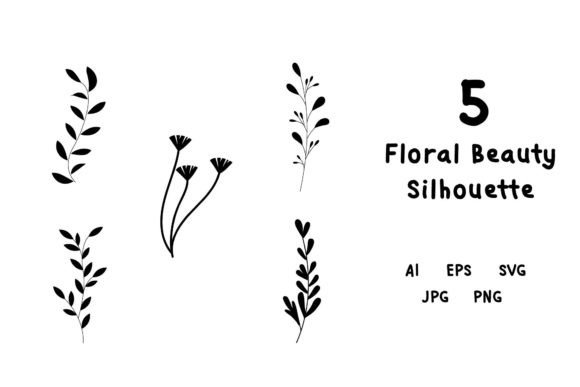
A typical bundle, containing an AI file, EPS, SVG, PNG, and JPG, is curated for interoperability across the creative ecosystem. The AI file is native to Adobe Illustrator, a primary tool for vector creation and editing, offering access to the fullest range of editable features. The EPS (Encapsulated PostScript) is a longstanding, cross-platform standard compatible with many legacy and professional printing systems. The SVG (Scalable Vector Graphics) is the web’s native vector format, essential for modern web design, interactive animations, and CSS styling.
The included PNG and JPG serve specific practical roles. The PNG, with its support for transparency, acts as a ready-to-use rasterized asset for digital contexts where vectors aren’t directly supported, like some social media backgrounds or quick mock-ups. The JPG provides a standard, high-quality compressed image for previews or contexts where file size is a priority. This multi-format approach ensures that from a web developer working with SVG to a screen printer using EPS, or a marketer needing a quick PNG, the botanical artwork is immediately actionable.
Real-World Applications: Where Botanical Vectors Bloom
The applications of these assets extend far beyond mere decoration. In commercial branding, a well-designed botanical vector can form the heart of a logo for a natural wellness brand, a boutique tea company, or an eco-friendly fashion label. Its scalability ensures logo integrity from a business card to a storefront sign. For apparel, such as t-shirt designs, vectors allow for clean, detailed prints that withstand the distortions of fabric stretching and washing.
In educational and publishing realms, these graphics provide accurate, reusable components for textbooks, online courses, and research presentations. An animator can import an SVG file of a flowering sequence into motion graphics software, bringing the growth of a plant to life layer by layer. For interior design and architecture, vectors of botanical motifs can be scaled to create patterns for wallpapers, custom decals, or etched glass partitions without any loss of detail. The common thread is the need for a quality source asset that is flexible, professional, and thematically appropriate.
Advantages Over Traditional Raster Imagery
Choosing a vector approach for floral botany themes presents clear advantages, particularly for projects requiring iteration or multi-platform deployment. When a client requests a logo color change, editing a vector file is a matter of minutes, not a painstaking re-drawing. For a website needing responsive graphics that look sharp on both retina displays and standard monitors, SVG files are the optimal solution. In collaborative environments, a vector file serves as a clean, layered master that different specialists—a graphic designer, a web developer, a print specialist—can all work from without degrading the source material.
Furthermore, from an archival perspective, a vector asset is future-proof. As display resolutions increase and new output mediums emerge, the same EPS or AI file can be rendered at a higher quality, whereas a low-resolution raster scan of a botanical drawing becomes obsolete. This durability makes investing in quality botanical vectors a practical decision for long-term projects and brand identities.
Considerations for Selection and Use
While the advantages are significant, effective use of floral botany vector graphics involves some key considerations. The first is stylistic congruence. Does the design’s rendering style—whether hyper-realistic, minimalist line art, or vintage engraved—align with the overall visual tone of your project? Secondly, consider botanical specificity. A generic “flower” vector might suffice for some uses, but a project focusing on native gardening or herbalism might require the accurate depiction of a specific species like Echinacea or Lavandula.
Technical proficiency matters, though it is often a low barrier. Basic manipulation of vector files, such as recoloring or simple resizing, can be done in many free or inexpensive software tools. More complex edits, like restructuring the plant’s form, require software like Illustrator or its alternatives and a foundational understanding of vector tools. Finally, licensing is always paramount. Ensuring that the asset bundle is acquired with appropriate rights for your intended use—commercial, personal, or redistribution—is a fundamental step.
Integrating Vectors into a Creative Workflow
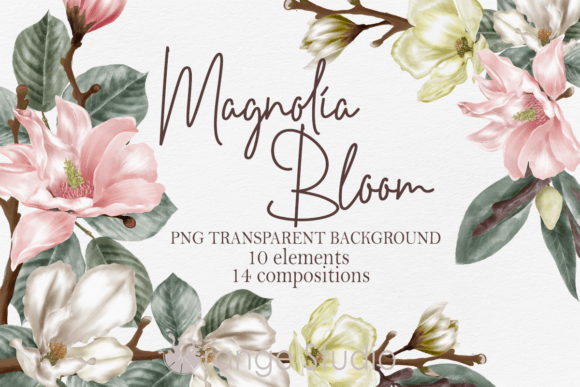
Imagine a workflow for creating a branded series of workshop materials for a floristry business. The designer begins by opening the AI file from the botanical vector bundle. They isolate a magnolia blossom and a fern leaf from the artwork, adjusting their colors to match the brand palette. These edited elements are saved as new SVG files for the web developer to integrate into the workshop registration webpage. Simultaneously, the designer uses the same elements, combined with typography, to create a logo lockup in Illustrator, exporting it as an EPS for print-ready business cards and as a PNG for digital letterheads.
The same source AI file provides components for a PowerPoint template (using exported PNGs) and for large-format signage at the event (using scaled EPS outputs). This single, editable, high-quality source eliminates the need to hunt for multiple matching images across different resolutions and formats, ensuring visual consistency and saving considerable production time. The botanical vectors act not as static pictures, but as dynamic, adaptable design components.
The translation of floral botany into vector design is more than a technical conversion; it is an empowerment of the form. It liberates the detailed beauty of plant morphology from the constraints of physical media and fixed resolution, allowing it to be spoken in the myriad contexts of the digital world. Whether the need is for a logo that embodies organic growth, an animation that illustrates pollination, or an educational diagram that clarifies plant anatomy, these vector assets provide a clear, scalable, and editable vocabulary. They enable creators, educators, and businesses to communicate with the timeless elegance of nature, rendered with the precision and flexibility demanded by modern design.